

What a Learning Brain Actually Needs
And why no technology can replace it

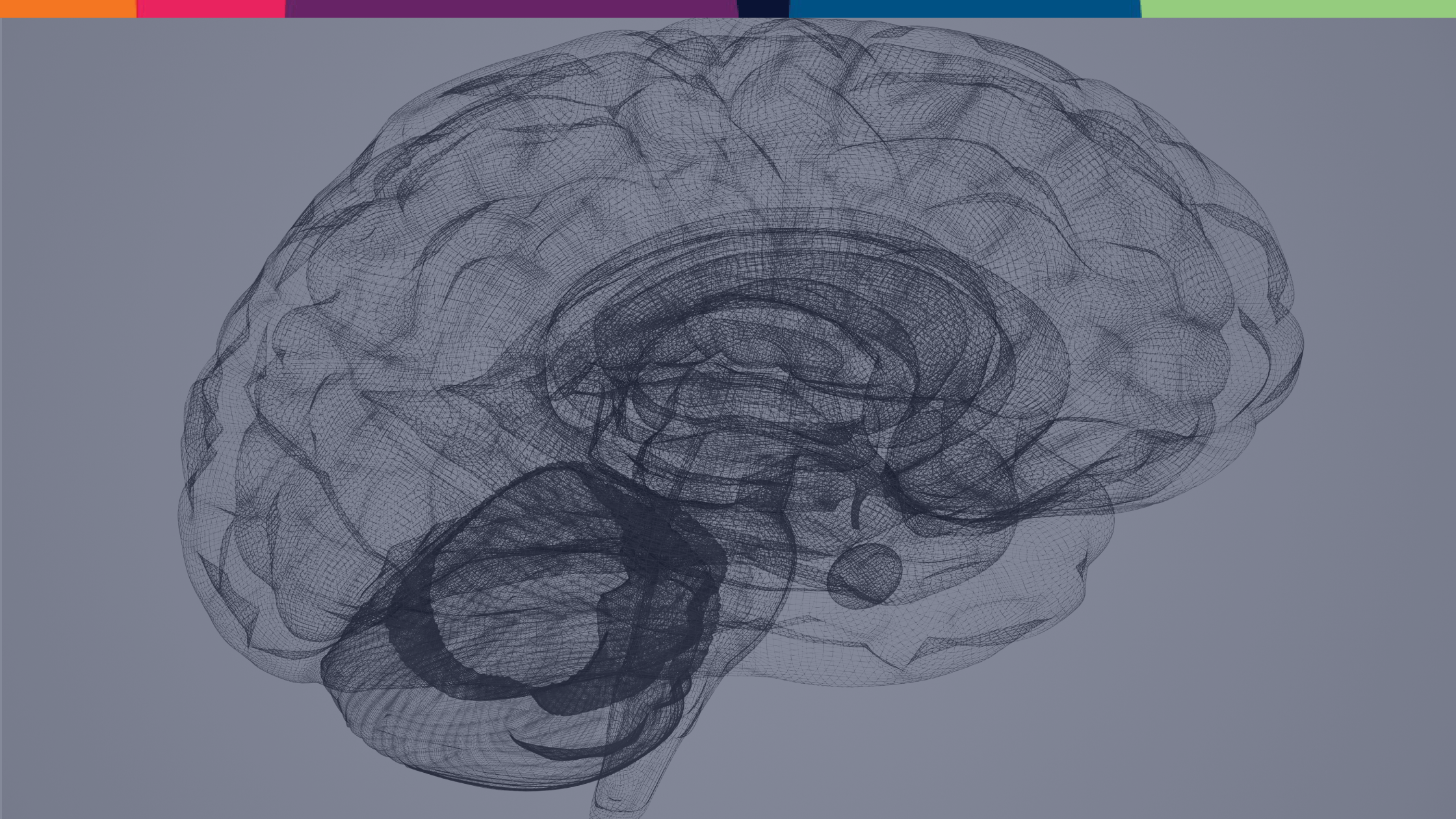
The brain is an electrical structure that learns by doing.
Everything we have done to help kids learn through technology rests on a myth about how the learning brain works: that learning is about receiving information, that if we deliver the right content in the right way at the right time, the brain will absorb it and learning will happen.
It won’t.
I have spent the last decades watching brains develop, as a child psychiatrist and as a scientist who studies how experience shapes the architecture of the brain, and I can tell you: the brain does not learn just by receiving. The brain is an electrical structure that learns by doing. Learning is a coordinated set of activities that build specific networks in the brain, networks that are goal directed and built through intention and action.
A Century Ahead of His Time
In 1899, a philosopher and psychologist named John Dewey sat in a schoolhouse in Chicago observing how children learn. He was running a laboratory school at the University of Chicago, spending his days watching how kids actually engage with the world when given the space to do so, and he noticed something the rest of us would take more than a century to prove.
He noted that children have four natural impulses that drive all learning:
Inquire (to push past the surface, to refuse the easy answer)
Construct (to build, to make, to give physical form to understanding)
Express (to put into words or images what one has come to know)
Communicate (to test that understanding against another mind)
Dewey insisted that these are not skills to be taught. They are drives already present in every child, the raw material of agency. So, the job of education is to create the conditions under which these impulses come alive, not to deliver content as if learners were passive receivers.
I get excited when I read Dewey as a neuroscientist, because — without knowing it — he was describing exactly what three large-scale brain networks need in order to develop. I have come to know these networks well. In my years of working with young people, I have seen these networks at work whenever learning accelerates. They are the architecture behind what matters most: the active construction of meaning.
The first I think of as the conductor — the executive control network, the part of the brain that holds the goal in mind, manages the steps, and keeps us going when the work is hard.
Planning, focus, persistence, self-regulation: they all live here, and this network develops slowly, not fully coming online until well into our twenties. Dewey’s impulses to inquire and construct are its fuel. When a child asks why and refuses the surface answer, when she builds something with her hands to give shape to what she is trying to understand, this network is being built.
The second I think of as the autobiographer — the default mode network, the part of the brain that holds our sense of self, our memories, our inner narrative.
It lights up when we are not focused on a task but instead when we’re daydreaming, reflecting, wondering what a friend really meant by something, or just letting our thoughts unspool on a long walk. Dewey’s impulses to express and communicate live here. When a child tells you what she has learned, when she puts it into her own words and tests her understanding against your mind, this network is doing its deepest work.
The third I think of as the spotlight — the salience network, whose job is to scan what the body is feeling and what is happening around us and decide, in real time, what deserves attention.
It switches between the conductor and the autobiographer depending on what the moment requires. When all four of Dewey’s impulses are active, the spotlight has rich and meaningful things to point at. When none are, it goes dark.
Three networks, doing three different jobs, all in one self.
These grow through active use, not through passive reception. Dewey knew this intuitively at the turn of the 20th century because he was paying attention to children the way a scientist pays attention to data. He was a deep observer, searching for meaning in what he saw. Today we can actually see it on a brain scan. When we perform complex cognitive tasks, different structures of the brain light up as they connect to one another to produce the work of learning.
Why Adolescence Makes This Urgent
There are periods in life when the brain changes in profound ways. Adolescence is one of them, and there is something about the teenage brain I wish every parent and teacher knew. During adolescence, the brain eliminates roughly forty percent of its neural connections. This sounds like damage, but it’s really specialization. The circuits that get used survive, and the ones that don’t are tagged and cleared away.
The adolescent brain is asking an ongoing question: What am I going to need to be? And it prunes accordingly. Whatever a teenager practices, whether that is inquiry, construction, expression, and communication, or the passive reception of someone else’s answers, the brain takes as the answer and builds around it.
Get this wrong during adolescence and the cost is far more than a failed test. It is the brain pruning away the very circuits it needed to keep.
We Built It Anyway
This year, there have been many ambitious attempts to accelerate learning using technology, including the creation of AI-powered online tutors.
You may be familiar with the name Sal Khan. He is the founder of Khan Academy, a platform of thousands of video lessons that hundreds of millions of people have used. Three years ago, Khan built an AI-powered tutor called Khanmigo, designed to coach students one-on-one the way a human tutor might, backed by the same technology behind ChatGPT, funded by Microsoft and government grants. His ambition was to provide a personal tutor for every student on earth.
This spring, Khan acknowledged it had failed. Students did not use it. When they did, the chatbot would prompt them with questions designed to guide their thinking, and students simply typed back “I don’t know.” Khan himself called it a non-event.
I was not surprised.
My friend and education researcher Punya Mishra pointed out something about Khan that I find revealing. There is a clip of Khan on Charlie Rose describing how he personally learns a new subject. He reads widely, draws timelines, copies maps, builds a scaffold for himself. When a textbook tells him myelin sheaths make signals faster and does not explain why, he refuses to accept it. He calls a biologist friend, an engineer, anyone who might help him understand. Why didn’t the book tell me that?
This aspect of how Khan learns is what made Khan Academy so valuable. It was a significant contribution to education: smart, creative content at a high standard, available to millions for free. Khan’s own learning process, full of Dewey’s impulses, produced something useful.
Here, his conductor is holding a goal. His autobiographer is making meaning. His spotlight is pointing at the gaps. He’s got all four of Dewey’s impulses, firing at once.
But when he created Khanmigo, he built something different. He built a product that asked students to receive, not to do. Everything Khan had done in his own learning process — the questioning, the scaffolding, the calling of friends, the refusal to accept the surface — was not designed into the product he created. What he gave students was the product of his learning, not the process. A lot of ed tech does exactly this. And we know that process, experience, and action are what build the brain and engage a learner.
We Cannot Route Around the Humans
Khan said something so important this spring that I have not forgotten: “I think our biggest lever is really investing in the human systems.”
There is a paradox here worth naming. Khan Academy gave hundreds of millions of students access to high-standard content. But when Khan built the tutoring model, he removed the very things that make tutoring work: the opportunity for agency, the human relationship, and the access to those deeper networks that build meaning into learning.
Benjamin Bloom understood this forty years ago. His landmark 1984 research showed that one-on-one tutoring produces dramatic academic outcomes, two standard deviations above the classroom average. But what Bloom found, much like Dewey before him, was that the power of tutoring lives in the relationship between the tutor and the student and in the agency it inspires. Not in the content delivery, but in the human connection and the motivated action it produces.
From Khan — someone who spent two decades building technology to improve education without depending on humans — these words are worth taking in. The engine of learning is in the child, not in the technology. Dewey understood this long ago, Bloom demonstrated it, and the neuroscience we have today confirms it. The networks that give meaning to learning and that make us capable of creative, innovative thought do not grow in isolation. They grow in the presence of other people.
The biology of becoming is never solitary. It is sustained from the outside in.
Three Things to Try This Week
Ask the question the book didn’t answer. Pick something you think you understand and push one layer deeper. Why does it work that way? What did they leave out? This is what Dewey called the impulse to inquire, and it is what the conductor needs: a question worth holding.
Make something instead of consuming something. A drawing, a timeline, a page of notes in your own hand, a meal you have never tried. Construction is how the autobiographer writes the story of who you are becoming, not a luxury of childhood.
Be present in the room. When a young person you love is working through something hard, don’t solve it and don’t hand it to a screen. Be there. Your nervous system is the one theirs is learning to match.
As always, I’m grateful to you for being here. Please let me know your thoughts and share this with others who might benefit from being part of the conversation.
— Pam
I love that your articles often make me recall things I used to know or used to be familiar with. I remembered Dewey's face and research immediately and it was refreshing to realize that my brain is still alive in there, haha. It was from my foundations of education class - I probably will never forget that class because I was sitting in it when 9/11 was happening.
As a writer by profession, I often struggle with AI. We are told that we need to be using it in my workplace. I never do, aside from my moral issues with the use of it, it never gives me what I want. I will eventually type in a prompt to satisfy the corporate gods, but I don't want to coach a program to get me the answers I need when my brain does the job just fine. All I'm doing is learning how to write a specific prompt and the AI isn't getting any better. Wash my laundry for me, and then we'll talk.
Khanmigo is an interesting name for their AI program. Con migo means with me in Spanish, but also migo could be a shortened form of Amigo - meaning friend. Either way, I think they've realized the AI isn't learning with them and it's not a friend.
So many things in this comment, very random, but these articles really inspire me.
Your writing is such a consistent breath of fresh air. I feel so validated, inspired, hopeful, and encouraged as a mom, as a leader, and an adult child still learning the agency that forms in safe connection with others I wasn't taught growing up. Brilliant and clarifying, week after week. Thank you forever, truly.